
In the competitive landscape of the legal industry, a well-crafted website is not just a digital presence but a powerful tool to attract and retain clients. Enter the realm of best lawyer websites, where design, content, and marketing strategies converge to create a seamless online experience that captivates potential clients and drives business growth.
From showcasing your expertise to building trust and establishing your firm as a thought leader, a best lawyer website is the cornerstone of your digital marketing efforts. Delve into this comprehensive guide to explore the latest design trends, essential content strategies, and effective marketing techniques that will elevate your website to the forefront of the legal industry.
Top Design Trends for Lawyer Websites
In today’s digital age, having a professional and visually appealing website is crucial for any lawyer seeking to establish a strong online presence. Here are the latest design trends in the legal industry, along with their importance and examples of effective lawyer websites.
Mobile-Friendliness
With the increasing use of smartphones and tablets, it is essential for lawyer websites to be mobile-friendly. This means ensuring that the website is easy to navigate, read, and interact with on smaller screens. A responsive design that automatically adjusts to different screen sizes is highly recommended.
User Experience
User experience (UX) plays a vital role in website design. A well-designed lawyer website should provide a seamless and intuitive experience for visitors. This includes clear navigation, well-organized content, and fast loading times. By focusing on UX, lawyers can make it easier for potential clients to find the information they need and take the next step, such as scheduling a consultation.
Visually Appealing Design
The visual appeal of a lawyer website is also important. A visually appealing design can make a positive impression on visitors and encourage them to explore the website further. This can include using high-quality images, videos, and graphics that are relevant to the legal practice.
Examples of Effective Lawyer Websites
Here are some examples of lawyer websites that effectively incorporate the latest design trends:
-
-*[Law Firm Name] (www.examplelawfirm.com)
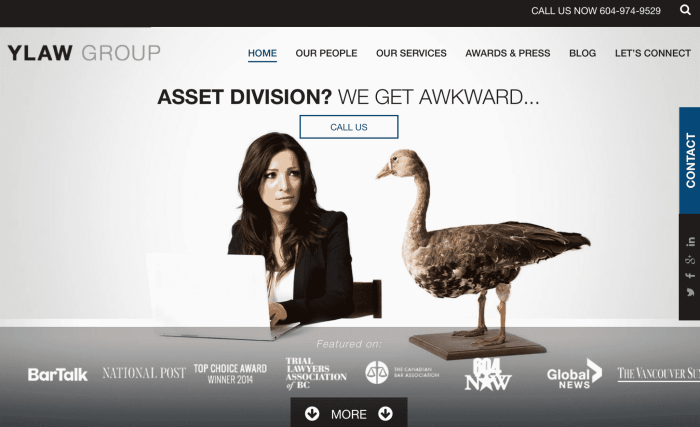
This website features a sleek and modern design with a focus on mobile-friendliness and user experience. The website is easy to navigate and provides clear information about the firm’s practice areas and services.
-*[Lawyer’s Name] (www.examplelawyer.com)
This website uses a more traditional design with a focus on showcasing the lawyer’s experience and expertise. The website includes detailed profiles of the lawyer and their team, as well as testimonials from satisfied clients.
-*[Legal Aid Society] (www.examplelegalaid.org)
This website provides information about legal aid services for low-income individuals. The website is designed to be accessible and easy to understand, with clear navigation and concise content.
Essential Content for Lawyer Websites

Crafting compelling website content is crucial for engaging potential clients and establishing your firm’s credibility. Your website should provide valuable information that showcases your expertise, builds trust, and encourages conversions.
Potential clients seek specific content on your website, including:
- Information about your practice areas and legal services
- Case summaries and testimonials
- Bios of attorneys and staff
- Answers to frequently asked questions
- Legal updates and resources
Writing Effective Bios
Your attorney bios should be concise yet informative, highlighting your qualifications, experience, and areas of specialization. Include a professional headshot, contact information, and a call to action encouraging visitors to schedule a consultation.
Case Summaries
Showcase your legal expertise through case summaries that demonstrate your successful outcomes and client satisfaction. Include details such as the case type, legal issues involved, and the favorable results achieved. Provide social proof by including client testimonials or reviews.
FAQs
Answer common questions potential clients may have about your services, fees, and legal processes. Organize your FAQs clearly and concisely, providing straightforward and informative responses. Consider using a search function to enhance user experience and make it easy for visitors to find the information they need.
Marketing Strategies for Lawyer Websites: Best Lawyer Websites

The success of a lawyer’s website largely depends on its ability to attract potential clients. Implementing effective marketing strategies is crucial for driving traffic and generating leads. These strategies should align with the target audience and the overall goals of the law firm.
Search Engine Optimization ()
involves optimizing a website to improve its visibility and ranking in search engine results pages (SERPs). By optimizing content, using relevant s, and building backlinks, law firms can increase their website’s visibility and attract more organic traffic.
Social Media Marketing
Social media platforms provide an excellent opportunity to connect with potential clients and build relationships. By sharing valuable content, engaging in discussions, and running targeted ads, law firms can establish their expertise, build trust, and drive traffic to their website.
Content Marketing, Best lawyer websites
Creating and sharing valuable content, such as blog posts, articles, infographics, and videos, can help law firms attract and educate potential clients. By providing insights into legal issues, showcasing expertise, and offering practical advice, law firms can establish themselves as thought leaders and attract leads.
Email Marketing
Email marketing allows law firms to nurture relationships with potential and existing clients. By sending out regular newsletters, updates, and personalized messages, law firms can stay top-of-mind and encourage conversions.
Paid Advertising
Paid advertising campaigns on platforms like Google AdWords and social media can help law firms reach a wider audience and drive targeted traffic to their website. By using specific s and targeting specific demographics, law firms can maximize the effectiveness of their advertising efforts.
Comprehensive Marketing Plan
To achieve optimal results, law firms should develop a comprehensive marketing plan that Artikels their target audience, marketing goals, strategies, and tactics. This plan should be regularly reviewed and updated to ensure it remains aligned with the firm’s objectives and the evolving digital landscape.
Best Practices for Lawyer Website Structure
A well-structured lawyer website ensures a seamless user experience and helps visitors find the information they need quickly and easily. Here are some best practices to follow:
Organize your content logically and present it in a hierarchical manner. Use clear and concise headings and subheadings to guide users through your website. Create intuitive navigation menus that allow visitors to access different sections of your site with ease.
Designate a Clear Call-to-Action
Every page on your website should have a clear call-to-action that encourages visitors to take the next step, whether it’s scheduling a consultation, contacting you for more information, or downloading a resource. Place your call-to-action prominently on the page and use compelling language to motivate users to act.
Ensure Website Speed and Accessibility
Website speed is crucial for user engagement. Optimize your website to load quickly on all devices, including mobile phones. Use high-quality images and videos that are compressed to reduce file size without compromising visual quality. Ensure your website is accessible to individuals with disabilities by following web accessibility guidelines.
Case Studies of Successful Lawyer Websites
Numerous law firms have leveraged the power of their websites to achieve remarkable success. By analyzing the key elements that have contributed to their triumph, we can gain valuable insights into the design, content, and marketing strategies that drive website effectiveness.
Innovative Design and User Experience
Websites that prioritize user experience and incorporate innovative design elements stand out in the competitive legal market. Firms like Dentons and Baker McKenzie have adopted cutting-edge technologies to create immersive and engaging online platforms.
- Dentons’ website features a sleek, minimalist design with high-quality visuals and interactive elements that enhance user navigation.
- Baker McKenzie’s website employs virtual reality technology to offer clients an immersive experience, allowing them to virtually tour the firm’s offices and interact with attorneys.
Compelling Content that Resonates
Successful lawyer websites create compelling content that resonates with their target audience. Firms like Quinn Emanuel Urquhart & Sullivan and Skadden, Arps, Slate, Meagher & Flom have mastered the art of delivering valuable information in a clear and engaging manner.
- Quinn Emanuel’s website features in-depth articles and white papers that provide thought leadership and demonstrate the firm’s expertise in complex litigation.
- Skadden’s website offers a comprehensive library of resources, including legal updates, podcasts, and webinars, tailored to meet the specific needs of its clients.
Effective Marketing and Promotion
Effective marketing and promotion are crucial for driving traffic to a lawyer’s website. Firms like Jones Day and Latham & Watkins have implemented innovative strategies to reach their target audience and establish a strong online presence.
- Jones Day utilizes targeted social media campaigns to engage potential clients and build brand awareness.
- Latham & Watkins leverages search engine optimization () techniques to ensure their website ranks highly in search results for relevant legal queries.
Last Recap
Crafting a best lawyer website is an art form that requires a blend of creativity, technical proficiency, and an unwavering commitment to delivering an exceptional user experience. By embracing the principles Artikeld in this guide, you can create a website that not only meets but exceeds the expectations of your target audience, propelling your firm towards greater success in the digital age.
FAQs
What are the key design elements of a best lawyer website?
A best lawyer website should prioritize mobile-friendliness, intuitive navigation, visually appealing aesthetics, and a clear call-to-action on each page.
What type of content should I include on my lawyer website?
Your website should feature compelling content such as practice area overviews, case summaries, testimonials, blog posts, and frequently asked questions.
How can I market my lawyer website effectively?
Implement a comprehensive marketing strategy that includes search engine optimization (), social media marketing, content marketing, and email campaigns.