

Maritime contracts play a vital role in facilitating global trade and transportation. These agreements govern the rights and obligations of parties involved in maritime activities, ensuring the smooth flow of goods and services across international waters.
From charter parties to bills of lading and marine insurance policies, maritime contracts encompass a diverse range of agreements that shape the maritime industry. Understanding their legal framework and key provisions is crucial for all stakeholders, including ship owners, charterers, shippers, and insurers.
Maritime Contract Types
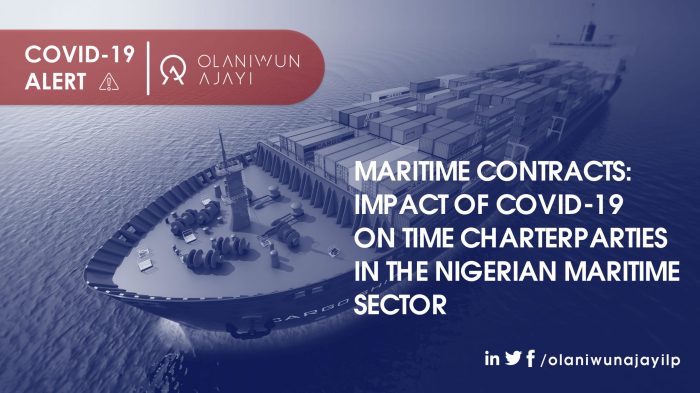
Maritime contracts are agreements that govern the transportation of goods and passengers by sea. They are essential for the smooth functioning of international trade and commerce.
There are many different types of maritime contracts, each with its own specific purpose and provisions. Some of the most common types of maritime contracts include:
Charter Parties
Charter parties are agreements between a shipowner and a charterer for the use of a vessel. There are two main types of charter parties: voyage charters and time charters.
- Voyage chartersare used for the transportation of goods from one port to another.
- Time chartersare used for the hire of a vessel for a specific period of time.
Bills of Lading
Bills of lading are documents that acknowledge the receipt of goods for transportation by sea. They also serve as a contract between the shipper and the carrier.
Bills of lading typically include the following information:
- The name of the shipper
- The name of the carrier
- The date of shipment
- The port of shipment
- The port of destination
- The description of the goods
- The quantity of goods
- The freight charges
Marine Insurance Policies
Marine insurance policies are contracts that provide protection against the risks of loss or damage to ships and cargo.
Marine insurance policies typically cover the following risks:
- Hull damage
- Cargo damage
- Loss of life
- Injury
- Pollution
Legal Framework for Maritime Contracts
The legal framework governing maritime contracts is complex and involves a combination of international conventions and national laws. These conventions and laws provide a set of rules and regulations that govern the formation, performance, and enforcement of maritime contracts.
One of the most important international conventions governing maritime contracts is the United Nations Convention on the Law of the Sea (UNCLOS). UNCLOS provides a comprehensive framework for the regulation of all aspects of maritime law, including the formation and enforcement of maritime contracts.
In addition to international conventions, national laws also play a significant role in governing maritime contracts. Each country has its own set of laws that govern the formation and enforcement of maritime contracts. These laws may vary from country to country, but they all generally share some common features.
Admiralty Courts
Admiralty courts are specialized courts that have jurisdiction over maritime disputes. These courts are typically staffed by judges who have experience in maritime law. Admiralty courts can hear a wide variety of maritime disputes, including disputes involving the formation, performance, and enforcement of maritime contracts.
Admiralty courts play an important role in resolving maritime disputes. These courts provide a forum for parties to resolve their disputes in a fair and impartial manner. Admiralty courts also help to ensure that maritime contracts are enforced according to the terms of the contract.
Key Provisions in Maritime Contracts
Maritime contracts are complex legal agreements that govern the transportation of goods and passengers by sea. They typically include a variety of provisions that set out the rights and obligations of the parties involved.
Some of the most important provisions in maritime contracts include:
Terms of Payment
The terms of payment specify how and when the buyer will pay for the goods or services provided by the seller. These terms may include the amount of the payment, the method of payment, and the timing of the payment.
It is important to ensure that the terms of payment are clear and unambiguous to avoid any disputes between the parties.
Delivery
The delivery terms specify how and when the goods or services will be delivered to the buyer. These terms may include the place of delivery, the method of delivery, and the timing of the delivery.
It is important to ensure that the delivery terms are clear and unambiguous to avoid any disputes between the parties.
Dispute Resolution, Maritime contracts
The dispute resolution provisions specify how disputes between the parties will be resolved. These provisions may include the choice of law, the choice of forum, and the method of dispute resolution.
It is important to ensure that the dispute resolution provisions are clear and unambiguous to avoid any disputes between the parties.
Drafting and Negotiating Maritime Contracts
Drafting and negotiating maritime contracts is a complex process that requires careful attention to detail. By following these tips, you can help ensure that your contracts are clear, concise, and enforceable.
When drafting a maritime contract, it is important to:
- Use clear and concise language.
- Define all terms used in the contract.
- Identify the parties to the contract and their respective obligations.
- Specify the duration of the contract.
- Include a dispute resolution clause.
Negotiating Maritime Contracts
When negotiating a maritime contract, it is important to:
- Be prepared to compromise.
- Be aware of the other party’s interests.
- Be willing to walk away from the negotiation if you cannot reach an agreement that is fair to both parties.
Role of Legal Counsel
Legal counsel can play a valuable role in the drafting and negotiation of maritime contracts. An experienced maritime lawyer can help you:
- Draft a contract that is clear, concise, and enforceable.
- Negotiate the terms of the contract on your behalf.
- Protect your interests in the event of a dispute.
Case Studies and Practical Examples

Maritime contracts are the backbone of global trade and commerce, governing the transportation of goods and services across vast distances. To fully grasp their significance, let’s delve into real-world case studies that showcase the intricacies and outcomes of these legal agreements.
The legal issues involved in maritime contracts are complex and varied, ranging from disputes over cargo damage to breach of charterparty agreements. By examining practical examples, we can gain a deeper understanding of how these contracts are applied and interpreted in the maritime industry.
The Case of the Damaged Cargo
In one notable case, a cargo ship carrying a consignment of perishable goods encountered severe weather during its voyage. The cargo was extensively damaged, resulting in a significant financial loss for the consignee. The dispute centered around the liability of the shipowner under the terms of the contract of carriage.
The court analyzed the relevant provisions of the Hague-Visby Rules, which govern the carriage of goods by sea. It determined that the shipowner was liable for the damage, as the weather conditions did not constitute an “excepted peril” under the contract.
This case highlights the importance of clearly defining the allocation of risk and liability in maritime contracts.
The Breach of Charterparty Agreement
Another case involved a dispute over the breach of a charterparty agreement. The charterer had failed to load the agreed-upon quantity of cargo, resulting in a loss of revenue for the shipowner. The shipowner claimed damages for breach of contract.
The court examined the terms of the charterparty and found that the charterer was in breach of its obligation to load the cargo. It awarded damages to the shipowner, emphasizing the importance of fulfilling contractual obligations in the maritime industry.
Conclusive Thoughts: Maritime Contracts
In conclusion, maritime contracts are complex legal instruments that require careful drafting and negotiation. By adhering to international conventions and national laws, parties can ensure that their agreements are enforceable and protect their interests. With a thorough understanding of the legal framework and key provisions, stakeholders can navigate the complexities of maritime contracts and foster a thriving maritime industry.
Answers to Common Questions
What are the different types of maritime contracts?
Maritime contracts encompass a wide range of agreements, including charter parties, bills of lading, marine insurance policies, and towage contracts.
What is the legal framework governing maritime contracts?
The legal framework for maritime contracts is composed of international conventions, such as the Hague-Visby Rules, and national laws, such as the Carriage of Goods by Sea Act.
What are the key provisions typically found in maritime contracts?
Key provisions in maritime contracts include terms of payment, delivery, dispute resolution, and limitation of liability.