
Workers compensation for small business – Workers’ compensation for small businesses is a critical aspect of safeguarding employees and ensuring a safe and compliant workplace. This guide provides a comprehensive overview of workers’ compensation, its legal requirements, and best practices for managing claims and preventing workplace accidents.
As a small business owner, understanding workers’ compensation is essential to protect your employees and your business. This guide will empower you with the knowledge and tools you need to navigate the complexities of workers’ compensation and ensure a safe and productive work environment.
Understanding Workers’ Compensation for Small Businesses

Workers’ compensation is a type of insurance that provides financial protection to employees who suffer work-related injuries or illnesses. It helps cover medical expenses, lost wages, and other costs associated with the injury or illness.
Workers’ compensation insurance is essential for small businesses because it helps protect them from financial liability in the event of a workplace accident. It also provides employees with peace of mind, knowing that they will be taken care of if they are injured on the job.
Benefits and Coverage of Workers’ Compensation Insurance
Workers’ compensation insurance provides a wide range of benefits to employees, including:
- Medical expenses: Workers’ compensation insurance covers all medical expenses related to a work-related injury or illness, including doctor’s visits, hospital stays, and rehabilitation.
- Lost wages: Workers’ compensation insurance provides benefits to employees who are unable to work due to a work-related injury or illness. These benefits are typically paid at a rate of two-thirds of the employee’s average weekly wage.
- Disability benefits: Workers’ compensation insurance provides benefits to employees who are permanently disabled as a result of a work-related injury or illness. These benefits are typically paid for the rest of the employee’s life.
- Death benefits: Workers’ compensation insurance provides benefits to the family of an employee who dies as a result of a work-related injury or illness. These benefits are typically paid in a lump sum.
Workers’ compensation insurance also provides coverage for employers, including:
- Liability protection: Workers’ compensation insurance protects employers from financial liability in the event of a workplace accident. This protection extends to both employees and third parties.
- Reduced costs: Workers’ compensation insurance can help employers reduce their costs by providing coverage for medical expenses, lost wages, and other costs associated with workplace accidents.
- Improved employee morale: Workers’ compensation insurance can help improve employee morale by providing employees with peace of mind, knowing that they will be taken care of if they are injured on the job.
Common Workplace Injuries and Illnesses Covered Under Workers’ Compensation
Workers’ compensation insurance covers a wide range of workplace injuries and illnesses, including:
- Back injuries
- Neck injuries
- Head injuries
- Broken bones
- Cuts and lacerations
- Burns
- Repetitive stress injuries
- Occupational diseases
If you are injured or become ill on the job, it is important to report the injury or illness to your employer as soon as possible. Your employer will then file a workers’ compensation claim with their insurance company. The insurance company will investigate the claim and determine whether you are eligible for benefits.
Legal Requirements and Considerations
Workers’ compensation laws mandate that employers provide financial and medical benefits to employees who suffer work-related injuries or illnesses. These laws vary by state, but all require employers to carry workers’ compensation insurance to protect their employees.
The type of workers’ compensation law applicable to a small business depends on the number of employees and the industry in which the business operates. Some states have mandatory coverage for all businesses with employees, while others have exemptions for small businesses with a certain number of employees.
Penalties for Non-Compliance
Failure to comply with workers’ compensation laws can result in significant penalties, including fines, imprisonment, and civil lawsuits. In addition, non-compliant businesses may be denied government contracts and face higher insurance premiums.
Obtaining Workers’ Compensation Insurance: Workers Compensation For Small Business
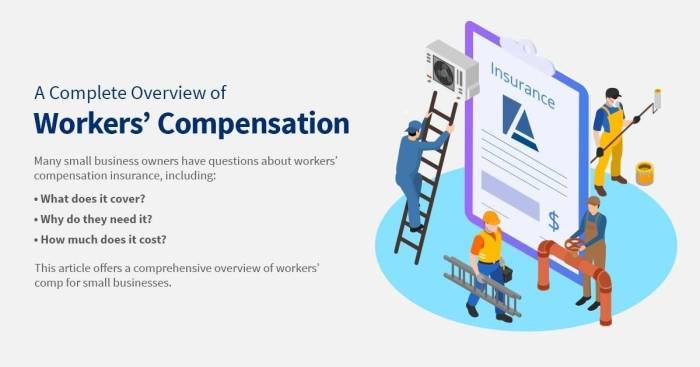
Securing workers’ compensation insurance is crucial for small businesses to protect themselves and their employees. Choosing the right provider, understanding the process, and considering the factors affecting premiums are essential steps to ensure adequate coverage.
Choosing the Right Provider, Workers compensation for small business
Select an insurer with a strong financial standing, a proven track record in workers’ compensation, and excellent customer service. Consider factors such as industry specialization, claim handling capabilities, and competitive rates.
Obtaining Workers’ Compensation Insurance
The process typically involves completing an application, providing payroll and employee information, and undergoing a risk assessment. Factors influencing premiums include industry, payroll, number of employees, and past claims history.
Benefits of Using a Broker or Agent
Brokers or agents can provide valuable assistance by:
- Comparing quotes from multiple insurers
- Negotiating competitive rates
- Providing ongoing support and guidance
- Managing claims and ensuring compliance
Managing Workers’ Compensation Claims
Managing workers’ compensation claims involves a series of steps that ensure the timely and appropriate resolution of employee injuries or illnesses sustained on the job. Understanding the process and roles involved is crucial for small businesses to navigate claims effectively.
The first step in managing a workers’ compensation claim is reporting the incident. This should be done promptly to the employer and the insurance carrier. The report should include details such as the employee’s name, date and time of the injury or illness, a description of the incident, and any witnesses.
Once the claim is reported, the insurance carrier will assign a claims adjuster to investigate the claim. The claims adjuster will review the report, interview the employee, witnesses, and employer, and gather medical records to determine the extent of the injury or illness and the appropriate benefits.
The claims adjuster will then make a decision on the claim. This decision may include approving or denying the claim, determining the amount of benefits to be paid, and establishing a treatment plan. The claims adjuster will also work with the employee and employer to ensure that the employee receives the necessary medical care and returns to work as soon as possible.
Effective communication is essential throughout the claims process. Employees should keep the claims adjuster informed of their condition and any changes in their treatment plan. Employers should provide the claims adjuster with any relevant information about the employee’s job duties and work environment.
By following these steps and maintaining open communication, small businesses can effectively manage workers’ compensation claims and ensure that their employees receive the benefits they are entitled to.
Preventing Workplace Accidents and Injuries
Workplace safety is paramount for small businesses to protect employees, reduce operational costs, and maintain a positive work environment. Small businesses often have limited resources, making it crucial to prioritize workplace safety to avoid costly accidents and injuries.
Common workplace hazards include:
- Slips, trips, and falls due to poor housekeeping or inadequate lighting
- Cuts and lacerations from sharp objects or machinery
- Overexertion or repetitive motion injuries
- Electrical hazards
li>Exposure to hazardous chemicals or fumes
Mitigating these hazards involves:
- Regularly inspecting the workplace for potential hazards
- Implementing safety protocols and procedures
- Providing personal protective equipment (PPE) to employees
- Training employees on safety practices
- Encouraging employee involvement in safety committees or initiatives
Safety Training and Employee Involvement
Safety training empowers employees with the knowledge and skills to identify and avoid workplace hazards. It also promotes a culture of safety and accountability.
Employee involvement in safety initiatives, such as safety committees or regular safety meetings, fosters a sense of ownership and responsibility among employees, encouraging them to actively participate in maintaining a safe workplace.
Ending Remarks

In conclusion, workers’ compensation for small businesses is a vital aspect of risk management and employee protection. By understanding the legal requirements, choosing the right insurance provider, and implementing effective safety measures, small businesses can minimize the impact of workplace accidents and injuries, protect their employees, and ensure a thriving and compliant workplace.
Popular Questions
What is workers’ compensation insurance?
Workers’ compensation insurance provides financial protection to employees who suffer work-related injuries or illnesses. It covers medical expenses, lost wages, and other benefits as mandated by law.
What are the benefits of having workers’ compensation insurance?
Workers’ compensation insurance protects both employees and employers. It ensures that injured employees receive necessary medical care and financial support, while protecting employers from potential lawsuits and financial liability.
How do I choose the right workers’ compensation insurance provider?
Consider factors such as the provider’s reputation, financial stability, coverage options, and customer service. It’s advisable to compare quotes from multiple providers to find the best fit for your business.