

In today’s uncertain business landscape, safeguarding your enterprise against unforeseen events is paramount. Get business insurance, a vital tool that empowers you to navigate challenges and secure your financial well-being. Embark on this comprehensive guide as we delve into the types, importance, and intricacies of business insurance, equipping you with the knowledge to make informed decisions that protect your company’s future.
From understanding the different types of insurance available to navigating the complexities of insurance policies, we’ll guide you through every step of the process. Learn how to assess your risks, choose the right coverage, and manage your insurance effectively. By investing in business insurance, you’re not just protecting your assets; you’re investing in the resilience and longevity of your enterprise.
Types of Business Insurance

Business insurance provides financial protection against risks and uncertainties that can threaten the stability and continuity of a business. There are various types of business insurance available, each designed to address specific areas of risk.
Property Insurance
Property insurance protects a business’s physical assets, such as buildings, equipment, inventory, and other tangible property, from damage or loss due to events like fire, theft, vandalism, or natural disasters.
Liability Insurance
Liability insurance protects a business from legal claims and financial liability arising from injuries or damages caused to third parties, including customers, employees, or the general public. Common types of liability insurance include general liability, professional liability, and product liability.
Workers’ Compensation Insurance
Workers’ compensation insurance provides benefits to employees who suffer work-related injuries or illnesses, regardless of fault. It covers medical expenses, lost wages, and other benefits as mandated by law.
Professional Liability Insurance
Professional liability insurance, also known as errors and omissions (E&O) insurance, protects professionals and businesses from claims of negligence or breach of duty in providing services or advice. It covers financial losses and legal expenses resulting from errors, omissions, or mistakes.
Importance of Business Insurance
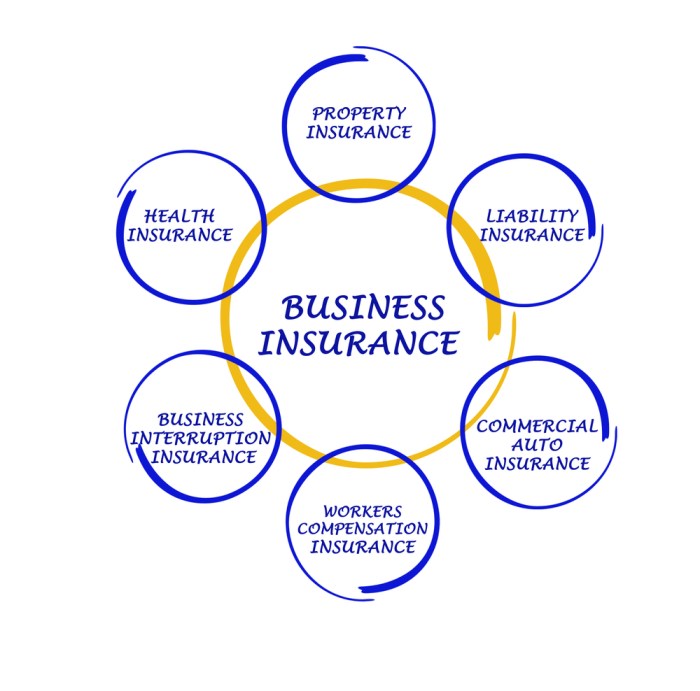
Business insurance is a critical safeguard against unexpected events that can jeopardize the financial stability of your enterprise. It provides a safety net, protecting your business from potential losses and liabilities, ensuring its longevity and growth.
Numerous case studies demonstrate the profound impact of business insurance. For instance, a small restaurant in a coastal area was devastated by a hurricane. However, thanks to its comprehensive insurance policy, the restaurant was able to quickly rebuild and reopen, minimizing business interruption and financial losses.
Legal Requirements
In many jurisdictions, certain types of business insurance are legally required. For example, most states in the United States mandate workers’ compensation insurance to protect employees in case of work-related injuries or illnesses.
Failure to comply with legal insurance requirements can result in penalties, fines, and even criminal charges. Therefore, it is crucial to understand the insurance laws and regulations applicable to your business and ensure compliance.
Factors to Consider When Choosing Business Insurance
Choosing the right business insurance policy is crucial for protecting your company from potential risks. Several factors should be considered to ensure you have adequate coverage for your specific needs. These include industry, size, location, and potential risks.
Industry
The type of industry you operate in can significantly impact your insurance needs. Different industries have unique risks, such as construction, healthcare, or manufacturing. Understanding the specific risks associated with your industry is essential for choosing a policy that provides tailored coverage.
Size
The size of your business is another important factor to consider. Larger businesses typically have more employees, inventory, and revenue, which can increase their exposure to risks. The number of employees, annual revenue, and assets should be taken into account when determining the appropriate level of coverage.
Location
The location of your business can also affect your insurance needs. Factors such as crime rates, natural disasters, and weather conditions can vary significantly from one location to another. It is important to assess the potential risks associated with your business’s location and choose a policy that provides coverage for these specific risks.
Potential Risks
Identifying the potential risks your business faces is crucial for choosing the right insurance policy. These risks can include property damage, liability, business interruption, and cyber attacks. By thoroughly assessing your potential risks, you can determine which types of coverage are necessary to protect your business.
Tips for Choosing Business Insurance
- Assess your insurance needs:Determine the specific risks your business faces and the level of coverage required to mitigate those risks.
- Compare different policies:Obtain quotes from multiple insurance providers to compare coverage, premiums, and deductibles.
- Work with an insurance broker or agent:An insurance professional can provide guidance, help you understand your options, and negotiate the best coverage for your needs.
Understanding Business Insurance Policies
Navigating the intricacies of business insurance policies can be daunting, but it’s essential to understand the key components to ensure adequate coverage for your business.
A business insurance policy typically consists of several sections that Artikel the terms and conditions of coverage. Let’s break down the key elements:
Coverage Limits
Coverage limits define the maximum amount the insurer will pay for covered losses. These limits vary depending on the type of coverage and the specific policy. For example, a commercial property insurance policy may have a coverage limit of $1 million for building damage.
Deductibles
A deductible is the amount the policyholder pays out of pocket before the insurance coverage kicks in. Deductibles can be flat amounts or percentages of the coverage limit. A higher deductible typically lowers the premium, while a lower deductible results in higher premiums.
Exclusions, Get business insurance
Exclusions are specific circumstances or events that are not covered by the policy. It’s crucial to carefully review the exclusions to avoid unexpected coverage gaps. For instance, a business interruption insurance policy may exclude losses due to natural disasters.
Interpreting an Insurance Policy
Understanding the language used in insurance policies can be challenging. Here are some tips for interpreting different sections:
- Declarations Page:Provides basic information about the policy, including the policyholder, coverage period, and premiums.
- Coverage Section:Artikels the specific risks and events that are covered by the policy.
- Exclusions Section:Lists the circumstances or events that are not covered by the policy.
- Conditions Section:Specifies the terms and conditions that apply to the policy, such as duties of the policyholder and the insurer.
Managing Business Insurance
Regularly reviewing and updating business insurance policies is crucial for ensuring that your coverage remains adequate and aligned with the evolving risks faced by your business. As your business grows and changes, so too should your insurance policies. An annual review is a good starting point, but you may need to update your policies more frequently if there are significant changes to your operations or the industry landscape.
Reducing Insurance Premiums
Implementing safety measures and risk management programs can help reduce the likelihood of claims, which can lead to lower insurance premiums. Some common risk management strategies include:
- Establishing and maintaining a safety program
- Conducting regular safety inspections
- Providing employee training on safety procedures
- Developing an emergency response plan
Filing Claims and Working with Insurance Companies
If you need to file a claim, it’s important to do so promptly. The sooner you file a claim, the sooner you can start the recovery process. Here are some tips for filing a claim:
- Contact your insurance company as soon as possible after the incident.
- Provide a detailed description of the incident, including the date, time, and location.
- Submit all relevant documentation, such as police reports, medical records, and invoices.
Once you have filed a claim, your insurance company will assign an adjuster to investigate the claim and determine the amount of coverage you are entitled to. It’s important to cooperate with the adjuster and provide all requested information. The adjuster will also likely inspect the damaged property or interview witnesses.
If you have any questions or concerns about your business insurance policy, don’t hesitate to contact your insurance company. They can help you understand your coverage and ensure that you are adequately protected.
Closing Summary

In the ever-changing business environment, having a robust insurance plan is not just an option but a necessity. By understanding the types of business insurance available, the importance of having adequate coverage, and the factors to consider when choosing a policy, you can tailor an insurance solution that meets the unique needs of your enterprise.
Remember, business insurance is not a cost but an investment in your company’s future, providing peace of mind and protecting your financial well-being. Embrace the power of business insurance and empower your enterprise to thrive in the face of uncertainty.
FAQ Compilation: Get Business Insurance
What are the most common types of business insurance?
The most common types of business insurance include property insurance, liability insurance, workers’ compensation insurance, and professional liability insurance.
Why is it important to have business insurance?
Business insurance protects your company from financial losses due to unexpected events such as property damage, lawsuits, or employee injuries.
How do I choose the right business insurance policy?
To choose the right business insurance policy, consider your industry, size, location, and potential risks. It’s also helpful to work with an insurance broker or agent.
What are the key components of a business insurance policy?
The key components of a business insurance policy include coverage limits, deductibles, and exclusions.
How can I reduce my business insurance premiums?
You can reduce your business insurance premiums by implementing safety measures, risk management programs, and maintaining a good claims history.