
In the unfortunate event of a slip and fall accident, securing the services of a skilled legal professional is crucial. Enter the good slip and fall lawyer, a beacon of hope for victims seeking justice and fair compensation. With their expertise and dedication, these attorneys navigate the complexities of personal injury law, ensuring that your rights are protected every step of the way.
Our comprehensive guide delves into the essential qualities of a good slip and fall lawyer, empowering you with the knowledge to make an informed decision. From evaluating your case to negotiating settlements and pursuing legal action, we provide invaluable insights to help you maximize your chances of success.
Attorney Expertise and Experience
When seeking legal representation for a slip and fall case, it is crucial to choose an attorney with the requisite expertise and experience. A competent slip and fall lawyer possesses a thorough understanding of the legal principles governing such cases, as well as the practicalities of navigating the legal system.
Credentials and Experience
Reputable slip and fall lawyers typically hold a Juris Doctor (J.D.) degree from an accredited law school and have passed the bar exam in the state where they practice. They have also gained significant experience handling slip and fall cases, representing clients in negotiations, mediations, and trials.
Specialization in Slip and Fall Law
Some attorneys specialize exclusively in slip and fall law. This specialization demonstrates a deep understanding of the nuances and complexities of these cases. They stay abreast of the latest legal developments and best practices in the field, ensuring that their clients receive the most up-to-date and effective legal representation.
Successful Case Outcomes
A track record of successful outcomes in slip and fall cases is a testament to an attorney’s competence and dedication. Look for attorneys who have a history of obtaining favorable settlements or verdicts for their clients, demonstrating their ability to navigate the legal process and secure positive results.
Case Evaluation and Investigation: Good Slip And Fall Lawyer

Evaluating a slip and fall case involves a thorough examination of the circumstances leading to the accident. The process begins with a comprehensive interview with the victim to gather detailed information about the incident, including the location, time, and any potential witnesses.
Evidence Gathering
Building a strong case requires meticulous evidence gathering. This may include:
- Obtaining incident reports, medical records, and witness statements.
- Documenting the scene of the accident through photographs and videos.
- Preserving physical evidence, such as damaged flooring or debris.
Expert Witnesses, Good slip and fall lawyer
In complex cases, expert witnesses can play a crucial role in proving liability. These professionals can provide specialized knowledge and analysis to support the following:
- Determining the cause of the fall.
- Assessing the property owner’s duty of care.
- Quantifying the victim’s damages.
Insurance and Liability
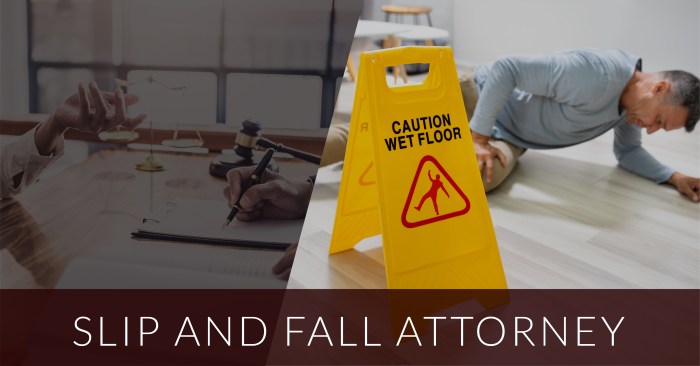
Understanding the insurance policies and legal principles surrounding slip and fall accidents is crucial for securing compensation. Various types of insurance may cover such incidents, and determining the responsible party is essential for pursuing a successful claim.
Types of Insurance Policies
- Property Liability Insurance:Covers businesses or property owners for injuries sustained on their premises.
- General Liability Insurance:Provides coverage for businesses against various liabilities, including slip and fall accidents.
- Homeowners/Renters Insurance:Protects homeowners or renters from liability claims arising from accidents on their property.
Legal Principles of Negligence and Liability
In slip and fall cases, the concept of negligence is paramount. To establish liability, it must be proven that the property owner or responsible party:
- Owed a duty of care:Property owners have a legal obligation to maintain safe premises.
- Breached that duty:Failure to address hazardous conditions or warn of potential risks.
- Caused the injury:The unsafe conditions must have directly led to the plaintiff’s fall and injuries.
Determining the Responsible Party
Identifying the responsible party can be complex. It may involve:
- Property Owner:The owner of the premises where the accident occurred is typically responsible.
- Tenant:In some cases, tenants may be held liable if they control the premises and fail to maintain them safely.
- Third-Party Contractor:If a third-party contractor was responsible for maintaining the premises, they may be held liable for any accidents.
Damages and Compensation

Slip and fall accidents can result in a wide range of damages, both physical and financial. Understanding the types of damages recoverable and the factors influencing compensation amounts is crucial for victims seeking justice.The severity of injuries, medical expenses, lost income, and emotional distress all play significant roles in determining the compensation awarded.
Negotiation and settlement are common methods of resolving slip and fall cases, allowing parties to reach mutually acceptable outcomes without the need for lengthy legal proceedings.
Types of Damages
- Medical Expenses:Costs associated with medical treatment, including hospital stays, surgeries, rehabilitation, and ongoing care.
- Lost Income:Wages or self-employment income lost due to the accident and resulting injuries.
- Pain and Suffering:Compensation for physical and emotional pain, distress, and loss of enjoyment of life.
- Loss of Consortium:Damages awarded to spouses or family members for the loss of companionship and support due to the victim’s injuries.
- Punitive Damages:Awarded in cases of gross negligence or willful misconduct to punish the responsible party and deter similar behavior in the future.
Factors Determining Compensation
The amount of compensation awarded in slip and fall cases is influenced by several factors, including:
- Liability:The degree of fault or negligence attributed to the responsible party.
- Severity of Injuries:The extent and permanence of the victim’s injuries.
- Medical Expenses:The actual and estimated future costs of medical treatment.
- Lost Income:The amount of income lost due to the accident and the victim’s inability to work.
- Pain and Suffering:The subjective experience of physical and emotional pain and distress.
- Insurance Coverage:The availability and limits of insurance coverage for the responsible party.
Negotiation and Settlement
Negotiation and settlement are common approaches to resolving slip and fall cases. Attorneys representing victims engage in discussions with insurance companies or the responsible parties to reach a mutually acceptable agreement. Settlements can provide victims with compensation without the need for lengthy and costly legal proceedings.
Legal Procedures and Timeline
Filing a slip and fall lawsuit involves adhering to specific legal procedures and meeting established deadlines. Understanding these procedures and timelines is crucial for maximizing the chances of a successful outcome.
The initial step is to gather evidence, such as medical records, witness statements, and photographs of the accident scene. Once the evidence is collected, a complaint is filed with the court, outlining the legal basis for the claim and the damages sought.
Case Timeline
- Filing the Complaint:The plaintiff has a limited time, typically within one to two years of the accident, to file the complaint.
- Discovery:Both parties exchange information and evidence relevant to the case, such as witness statements and medical records.
- Negotiation:Attorneys for both sides may engage in negotiations to settle the case without going to trial.
- Trial:If negotiations fail, the case proceeds to trial, where a judge or jury hears the evidence and determines liability and damages.
- Appeal:Either party may appeal the court’s decision to a higher court.
Meeting Legal Deadlines and Court Procedures
Meeting legal deadlines and complying with court procedures is essential. Failure to do so can result in the dismissal of the case or other adverse consequences. It is advisable to consult with an experienced slip and fall attorney to ensure that all legal requirements are met.
Wrap-Up
Remember, choosing the right slip and fall lawyer can make all the difference in the outcome of your case. By following our expert advice and seeking legal counsel promptly, you can increase your chances of obtaining the justice and compensation you deserve.
Don’t hesitate to reach out to a qualified attorney today and take the first step towards protecting your rights.
FAQ Explained
What qualities should I look for in a good slip and fall lawyer?
A good slip and fall lawyer should have extensive experience handling personal injury cases, a deep understanding of premises liability law, and a proven track record of success in obtaining fair compensation for their clients.
How do I evaluate my slip and fall case?
To evaluate your slip and fall case, you should gather evidence such as medical records, witness statements, and photographs of the accident scene. Consulting with an experienced lawyer can help you determine the strength of your case and the best course of action.
What types of damages can I recover in a slip and fall case?
In a slip and fall case, you may be entitled to compensation for medical expenses, lost wages, pain and suffering, and other damages as determined by the court.