
Cash into bank account is a crucial aspect of financial management, offering convenience, security, and accessibility to your funds. This comprehensive guide delves into the various methods of depositing cash into your bank account, empowering you with the knowledge to choose the most suitable option for your needs.
Whether you prefer the ease of mobile banking, the efficiency of ATMs, the traditional approach of over-the-counter deposits, or the convenience of direct deposit, we’ve got you covered. Read on to discover the advantages, disadvantages, fees, and step-by-step instructions for each method, ensuring a seamless and secure cash deposit experience.
Cash Deposit Methods
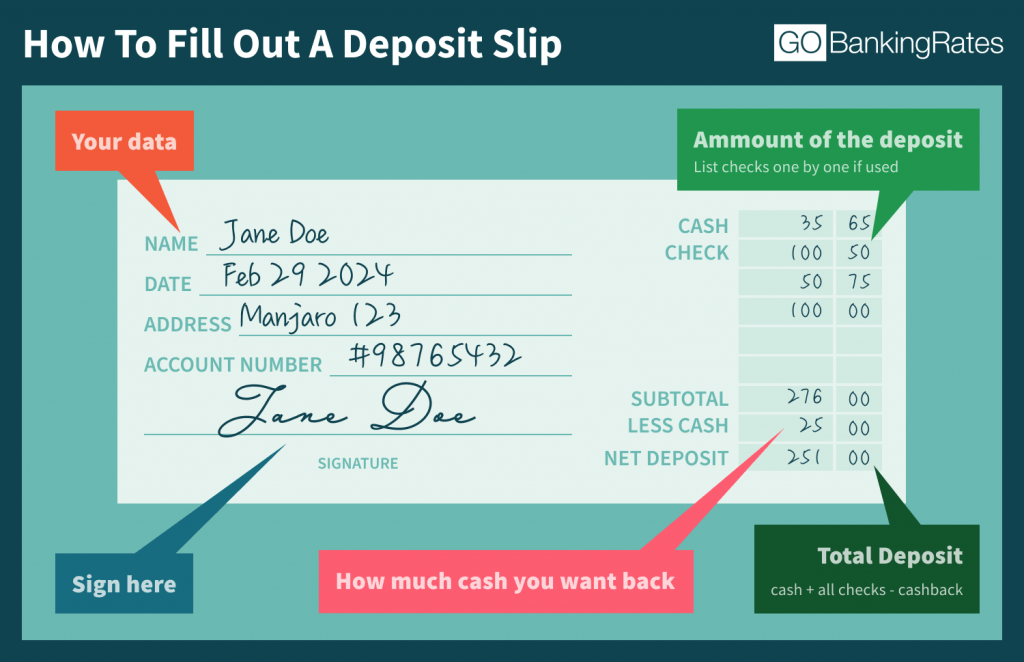
Depositing cash into a bank account offers a convenient and secure way to manage funds. There are various methods available, each with its own advantages and drawbacks.
The most common cash deposit methods include:
Bank Branch Deposit
- Pros:Personal interaction, immediate deposit confirmation, no fees (in most cases).
- Cons:In-person visit required, limited hours, potential for long queues.
ATM Deposit
- Pros:24/7 availability, convenient for quick deposits, often free for bank customers.
- Cons:May have deposit limits, potential for machine malfunctions.
Mobile Check Deposit
- Pros:Remote deposit from anywhere, convenient for small amounts.
- Cons:Requires a compatible mobile device, may have daily or monthly limits, potential for delays in processing.
Mail-in Deposit
- Pros:No in-person visit required, convenient for remote areas.
- Cons:Slow processing times, potential for lost or stolen mail, may require a deposit slip.
Third-Party Deposit
- Pros:Can be convenient if you don’t have a bank account, some retailers offer this service.
- Cons:May involve fees, potential for delays in processing, not all retailers offer this service.
| Method | Features | Fees | Processing Time |
|---|---|---|---|
| Bank Branch Deposit | In-person, immediate confirmation | Usually free | Immediate |
| ATM Deposit | 24/7 availability, convenient | May have fees for non-customers | Usually same day |
| Mobile Check Deposit | Remote, convenient for small amounts | May have limits, potential delays | Varies depending on bank |
| Mail-in Deposit | No in-person visit required | Slow processing times | Can take several days |
| Third-Party Deposit | Convenient for non-bank account holders | May involve fees, delays | Varies depending on provider |
Mobile Banking Cash Deposit
Mobile banking cash deposit allows you to deposit cash into your bank account using a mobile banking app, eliminating the need to visit a physical bank branch. It offers convenience and accessibility, enabling you to make deposits anytime, anywhere.
Step-by-Step Process
- Log in to your mobile banking app:Enter your login credentials and access your bank account.
- Select ‘Deposit Check’:Navigate to the ‘Deposit Check’ or ‘Mobile Deposit’ feature within the app.
- Endorse the check:Sign the back of the check as you would for a regular deposit, with the words “For Mobile Deposit Only” and your signature.
- Take clear photos:Capture a clear image of the front and back of the check, ensuring all four corners are visible and the information is legible.
- Review and submit:Check the images for accuracy and completeness, then submit the deposit. The funds will be credited to your account within a few business days.
Tips for Security
- Keep your app updated:Ensure your mobile banking app is always up-to-date to protect against security vulnerabilities.
- Use a strong password:Create a complex and unique password for your mobile banking account to prevent unauthorized access.
- Avoid public Wi-Fi:When making mobile cash deposits, use a secure Wi-Fi network or your cellular data connection to safeguard your information.
- Report lost or stolen devices:If your mobile device is lost or stolen, report it immediately to your bank to disable access to your banking app.
ATM Cash Deposit

Depositing cash into your bank account at an ATM is a convenient and secure way to make a deposit. Here’s a step-by-step guide on how to do it:
- Insert your ATM card into the ATM.
- Enter your PIN.
- Select the “Deposit” option from the menu.
- Enter the amount of cash you want to deposit.
- Insert the cash into the deposit slot.
- Confirm the amount and press “Enter.”
- Take your receipt and card.
Types of ATMs That Accept Cash Deposits, Cash into bank account
Not all ATMs accept cash deposits. Look for ATMs with a deposit slot or envelope feature. These ATMs are typically located at bank branches, grocery stores, and other convenient locations.
Limitations and Fees
There may be limitations on the amount of cash you can deposit at an ATM. Additionally, some banks may charge a fee for ATM cash deposits. Be sure to check with your bank for specific details.
Over-the-Counter Cash Deposit

Over-the-counter cash deposits offer a convenient way to deposit cash directly into your bank account at a physical bank branch. This method is straightforward and widely accessible, providing a secure and reliable option for cash deposits.
When making an over-the-counter cash deposit, you will need to visit a bank branch during their business hours. You will be required to provide a valid government-issued identification card, such as a driver’s license or passport, to verify your identity.
The bank teller will count the cash you are depositing and credit it to your account. You will receive a receipt as proof of your transaction.
Processing Time and Fees
Over-the-counter cash deposits are typically processed immediately, and the funds are credited to your account within a few minutes. However, some banks may have a hold period for large cash deposits, especially if you are a new customer or if the amount deposited exceeds a certain threshold.
This hold period can vary from one business day to several days, depending on the bank’s policies.
Over-the-counter cash deposits may incur a small fee, depending on the bank’s policies. Some banks offer free cash deposits for certain account types or up to a specific amount. It is advisable to check with your bank beforehand to inquire about any applicable fees.
Direct Deposit
Direct deposit is a convenient and secure way to receive funds electronically into your bank account. It eliminates the need for paper checks and the hassle of physically depositing them at a bank or ATM.
Direct deposit allows you to receive payments directly from various sources, such as employers, government agencies, and other institutions.
Benefits of Direct Deposit
- Convenience: Direct deposit eliminates the need to visit a bank or ATM to deposit checks.
- Security: Direct deposit is a secure method of receiving funds as it reduces the risk of lost or stolen checks.
- Timeliness: Funds are typically deposited into your account on the same day or within a few business days, ensuring prompt access to your money.
- Reduced risk of errors: Direct deposit minimizes the possibility of errors that may occur during manual check processing.
Common Sources of Direct Deposits
- Payroll: Many employers offer direct deposit as a convenient way to pay their employees’ salaries.
- Government benefits: Direct deposit is commonly used to distribute government benefits such as Social Security, Medicare, and unemployment insurance.
- Tax refunds: The Internal Revenue Service (IRS) offers direct deposit as an option for tax refunds.
- Annuities: Insurance companies and financial institutions may offer direct deposit for annuity payments.
Setting Up Direct Deposit
Setting up direct deposit typically involves providing your bank account information to the source that will be making the payments. This can be done online, by mail, or in person.
Once your direct deposit is set up, funds will be automatically deposited into your account on the designated payment date. However, there may be potential delays in receiving funds due to factors such as bank processing times or payment processing issues.
Wrap-Up: Cash Into Bank Account
In the realm of cash into bank account, there’s a method for every need. From the cutting-edge convenience of mobile banking to the widespread availability of ATMs, and from the personal touch of over-the-counter deposits to the hassle-free nature of direct deposit, the choice is yours.
By understanding the nuances of each option, you can optimize your financial management and enjoy the peace of mind that comes with knowing your funds are safe and accessible.
Query Resolution
What are the benefits of using mobile banking for cash deposits?
Mobile banking offers convenience, 24/7 accessibility, and the ability to deposit cash without visiting a bank branch.
What should I keep in mind when making an ATM cash deposit?
Ensure you use an ATM owned by your bank or a trusted financial institution, and be aware of any fees or limits associated with the transaction.
What documentation is required for over-the-counter cash deposits?
Typically, you will need a valid government-issued ID and your bank account number.
How long does it take for a direct deposit to reflect in my account?
Direct deposit processing times vary depending on the source of the funds and your bank’s policies, but it generally takes 1-3 business days.